Get ready to revolutionize your marketing strategy! With 2025 just a short span away, an array of emerging technologies will significantly alter how we connect with our audiences. Adapting to these changes is no longer an option but a crucial necessity for staying competitive. This article discusses the key marketing technology trends you should know to ensure your business thrives.
From AI-powered personalization to immersive experiences, we’ll explore the tools and strategies for dominating the martech landscape. Prepare to adapt your thinking and step into the future of marketing!

The Rise Of The AI-powered Marketer: Trends in Martech
AI is no longer a futuristic concept; it provides the backbone for the marketing happening today — and will come tomorrow. By 2025, AI tools will be more advanced and deeply entrenched in every part of the marketing process. As AI continues to evolve, we can expect even more innovative applications that will continue improving marketing strategies’ effectiveness and flexibility, from predictive analytics to personalized content creation. Let’s look at how these developments will influence the future of marketing tech.
AI-driven Personalization For More Than Segmentation
Gone are the days when personalization was considered a “nice-to-have” — a consumer expectation. Artificial Intelligence will touch new milestones in personalization by 2025. Instead of randomly targeting demographic segments, such marketing tools will examine large volumes of data to get a sense of individual people — and target their preferences, habits, and wants accordingly. Marketers can leverage this deep understanding to serve highly personalized content, offers, and experiences that speak to each customer.
Personalization will be outcome-focused based on temporal, geo, and contextual parameters. It will create more effective messaging and significantly higher engagement and conversion across all channels. Personalization is a must for shaping the digital landscape of customer passions. Companies must invest in systems that can understand complex data and leverage it to provide targeted, hyper-personalized experiences.” AI can make campaign changes based on live user activity and responses.
The Future Marketing Tool: AI-powered Content Creation
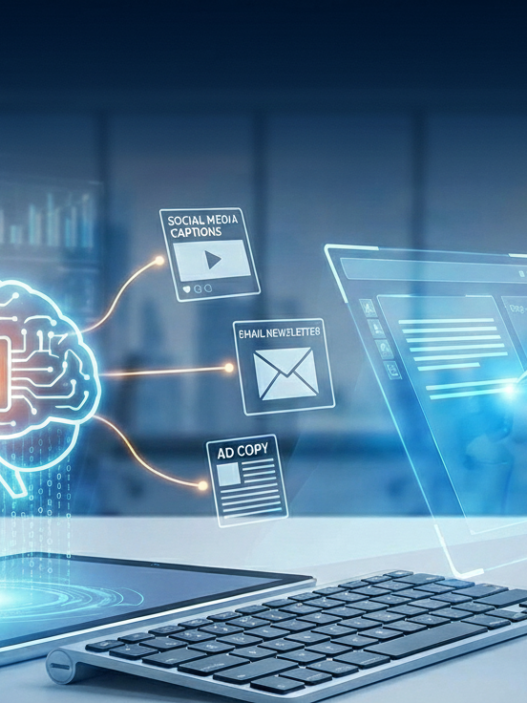
Now more than ever, the demand for high-quality content is at an all-time high, and AI is coming to the rescue. AI-based content generation is due to upgrade beyond essential copywriting assistance. By 2025, AI tools can create content from blog posts to social media updates and video scripts with particular parameters and creative briefs.
Additionally, natural language processing (NLP) would enhance AI’s capability to comprehend and generate human language. This would be a great boon for marketers who want to scale their content generation efforts. AI content generation will allow it to exceed quantity and deliver more relevant communications.
Metaverse Marketing Frontier: The Immersive Experiences
The metaverse is no longer just a buzzword but is quickly emerging as a new marketing frontier. By 2025, we should see more brands utilizing virtual and augmented reality (VR/AR) technologies to create immersive experiences that push boundaries beyond traditional marketing channels. These unique experiences will also enable consumers to engage with products and brands like never before, resulting in heightened engagement and stronger connections. Businesses will have to adjust and work towards developing a metaverse strategy that ensures their companies survive and thrive for years to come.
VR And AR Marketing: Making Products Real
VR and AR technology will be integral to allowing consumers to interact with and experience products in interesting and engaging ways. In 2025 there will be more virtual showrooms, interactive product demos, and personalized virtual shopping experiences. These immersive experiences will let consumers see and sample products before they purchase and interact directly with brands in a realistic virtual environment.
This method drives purchase decisions and vastly improves their customer journey. VR and AR also provide an immersive experience through which brands can reach their customers — a huge competitive advantage for progressive brands. These immersive experiences enable shoppers to see and feel products as they would in a physical environment, bridging the gap between the digital and physical worlds.
Virtual Events & Brand Spaces: Engagement Opportunities
This is the beginning of a world where virtual events will revamp their traditional forms into more enjoyable and interactive events of the Metaverse! “By 2025, brands will host virtual concerts, conferences, and product launches in immersive digital worlds. This will result in dynamic interaction between attendees and the event, ensuring a more lively and participative experience.
In addition, virtual brand spaces allow companies to establish a permanent presence in the metaverse, allowing customers to explore and engage with their offerings at leisure. Such tactics are transforming the way consumers engage with brands. This kind of engagement is a huge benefit over traditional methods and is key to engaging and retaining a digital-first consumer.
Maximizing The Potentials Of Data Analytics
Very few people question how companies generate, gather, and leverage information about their potential customers. As 2025 approaches, data analytics and machine learning (ML) will become more prominent, making it easier for brands to gather deep insights into customers and campaign performance. This will help marketers make better decisions and optimize their strategies for the best results.
In the coming years, brands should invest in technology that will allow them to gather and interpret multiple data sets, including general, transactional, and interactional data.
Predictive Analytics: Using Predicting Customer Behavior
We are no longer purely reliant on historical data. In 2025, predictive analytics will be a cornerstone for understanding and anticipating customer behavior. With machine learning algorithms, marketers can also begin predicting future trends, spotting new opportunities, and personalizing campaigns before the sale happens. This entails predicting customer actions before they are taken and customizing the experience to fulfill a need.
Heavy Data: Instant Campaign Management
The human race is moving to data analysis, which will revolutionize how marketers measure the success of their campaigns. By 2025, expect to see advanced tools that offer instant insights into how campaigns are performing and enable you to make changes on the fly. Such agility will allow marketers to rapidly fine-tune their campaigns to deliver the most significant ROI with minimal wastage. Real-time feedback loops help enable a better responsive marketing ecosystem. With these tools, it’s possible to pivot faster, capitalize on opportunities, and mitigate costly mistakes, which is a tremendous improvement.
Ethical Marketing: The Future Of Trust And Loyalty
The increased use of personal data creates a higher demand for transparency and ethical marketing approaches. Transparency and ethical practices will be critical for building trust and long-term consumer relationships 2025. Consumers are also becoming increasingly data-aware, so you will need to be forthcoming about how and why you use data. Companies prioritizing these values will foster deeper relationships and bolster their brand reputation.
Transparent Data Practices: Building Consumer Trust
The consumer needs to trust you, and for it to happen, one needs to be completely transparent regarding data collection and usage. In 2025, transparency regarding how customer data is used will be the norm for marketers, and customers will feel they have more control over their data. This transparency would mitigate privacy-conscious consumers’ concerns and foster a greater sense of trust between consumers and brands.
Companies must better communicate to consumers what they’ll use their data for and whether they can opt-out. This is important for creating a proper relationship between businesses and customers, building trust and long-term loyalty.
Ethical AI: Fairness And Inclusion
As AI continues penetrating marketing strategies, ethical AI solutions are necessary. Marketers must use AI reasonably, inclusively, and without bias in 2025. It will take far more effort to ensure this, but algorithms must also be designed not to continue discriminatory practices, and marketers must try to mitigate risks. Consumers expect ethical behavior when engaging with brands — particularly with their sensitive data. The virtue of ethical AI practices is of utmost importance for gaining customer loyalty and enjoying long-term success.
The New Marketing Tools: Preparing For The Future
Marketing automation tools are evolving and getting smarter. In 2025, AI-powered one-stop automation platforms that encapsulate complicated marketing functions to facilitate marketers focusing on strategic initiatives will become more in use. Automation will enable businesses to do more things effectively across all marketing channels while enhancing the customer journey. As we progress, these automation tools will form the backbone of (efficient, data-driven) marketing practices.
Intelligent Workflows: Simplifying Marketing Flows
It paves the way for a future of marketing powered by advanced workflows that will automate many traditional marketing processes. 2025 will see the presence of workflows that can adapt according to your data and personalize your marketing messages and content calendars. Such automation will significantly increase the productivity of the marketing teams and will give teams the ability to focus on innovative solutions rather than repetitive tasks. Marketing will be powered by intelligent workflows, which will help create a more efficient and adaptable process capable of bringing businesses growing success.
Automatic Consumer Paths: Hitchless Utilization
Automated customer journeys will allow brands to provide seamless and tailored interactions across every touchpoint. In 2025, automation tools will handle personalized email campaigns, dynamic website content, and targeted ads to nudge leads along the sales funnel. Such automation will deliver a unified, cohesive, and compelling customer journey/guided experience, improving outcomes and customer stickiness. This strategy will enhance brand loyalty and customer retention by addressing the consumer at each step of the journey.
Conclusion
The technological advancements of 2025 will impact the marketing landscape in more ways than one. Whether it’s AI-generated content that understands your audience’s needs, interactive experiences through the metaverse, advanced data analytics to guide decision-making, or ethical marketing strategies that prioritize consumer trust, the foundations of success will lie in recognizing and adapting to these trends well. The future marketing tools are not only automated & efficient but also bring a shift of focus on higher level jobs & improve customer interaction.
These shifts will empower you to prepare your business better for the years to come, ensuring your marketing efforts are more likely to succeed. Explore these trends now to decide which tools make sense for achieving your goals in 2025. Now is the time to adapt and innovate to stay ahead of the curve and remain competitive in the ever-changing marketing landscape.
Frequently Asked Questions
What are the trends in marketing technology to implement in 2025?
Key trends are AI-driven personalization, immersive metaverse marketing (VR/AR), advanced data analytics, ethical marketing practices, and increasingly, marketing automation. Technologies that will influence the marketing future. To survive, companies must address these future trends in martech.
What role does AI play in improving personalization in my marketing?
AI can process vast amounts of data to learn about individual customer preferences, allowing you to target them with hyper-personalized content, offers, and experiences. This creates an even deeper dichotomy than segmentation regarding personalization with each customer.
What is the role of the metaverse in future marketing?
VR and AR can be used in the metaverse to create relatively fresh immersive experiences. This allows brands to build virtual showrooms, conduct interactive product demonstrations, and hold events in virtual spaces, providing customers with more compelling ways to interact with their products and services.
TechQwaz is your go-to platform for the latest insights on technology, innovation, and personal branding. Learn more about our mission on our About Us page, or reach out to us through our Contact page. Stay connected and updated by following us on Instagram, Twitter (X), and explore more valuable content on our Blogspot. Keep exploring, keep growing!