The world is speaking, and it’s not just to one another. As voice search is gaining more popularity, users interact with their devices in a variety of ways, and by doing so, it’s transforming the way businesses can be marketed. So, are you prepared to unleash this new frontier? In this blog post, we will examine the maturing space of voice-based search ads and what you need to know to boost your performance marketing strategy.
Next, we will discuss the basics of voice-activated devices, followed by advanced strategies to optimize your campaigns. So, let’s jump in and find out how you can ensure your brand gets heard in the voice-first world.
The Increase Of Voice Search And Its Effects on Advertising
Voice search is not just a trend; it’s a revolution in how people interact with the tech. Smart speakers, voice-assistant phones, and in-car systems are gaining widespread popularity. This transition can bring new opportunities and challenges for performance marketers. Ignoring this trend would allow you to fall far behind, whereas harnessing it can help amplify your reach and have a huge impact.
This section will Explore:
- As with any trend, voice search is not without its quirks.
- What search behaviors differ between text-based and voice-based searches?
- Why do these changes present fresh opportunities for advertisers?
Understanding Voice Search Ads
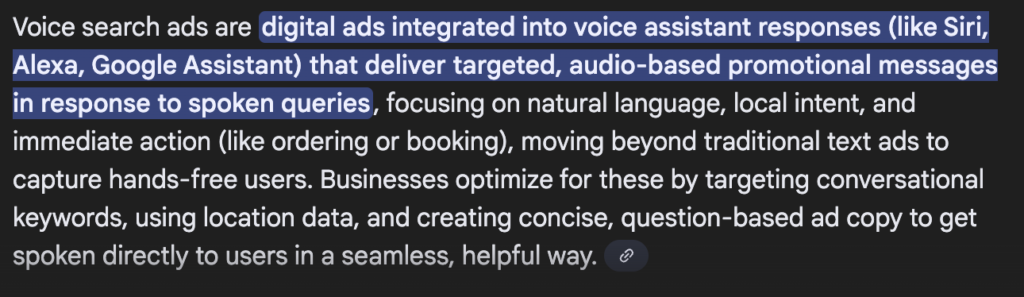
Before we discuss the strategies, let’s clarify what voice search ads are. These are ads served into voice interfaces mainly in response to voice queries. Compared to traditional text-based ads, these voice-enabled ads must be brief, conversational, and highly relevant to the user’s intent. These factors usually include location, timing, and the specific query the user asks.
When designing voice search ads, here are some key points to keep in mind:
- Conversational Tone: When users talk naturally to their devices, ads must fit seamlessly into that conversation.
- Contextual Relevance: The ads must be highly relevant to the user’s immediate query and location.
- Brevity: Voice aids must be concise, direct, and understandable.
- Call to Action: The expected action should be evident and achievable with voice commands.
These nuances distinguish voice search advertising from traditional search marketing. It will require a new mindset, with user experience and visual impact at its core.
Activating Voice Search Ads In Performance Marketing
Now, let us get down to its crux. How to succeed in voice search advertising with top strategies. Here are some straightforward steps you can begin taking:
Keyword Research For Voice Search
The rules of traditional keyword research do not fully apply to voice search. Here’s what you should pay attention to:
- Long-Tail Keywords: Because voice queries are longer and more conversational, it is essential to use long-tail keywords that resonate with how people speak. For example, you could add “best coffee shop near me” instead of “coffee shop.”
- Conversational Questions: Consider the questions that users might use a natural language to ask. Filter your questions based on those that apply to your business.
- Question-Based Keywords: Keywords starting with “what,” “ where,” “when,” “how,” and “why.” Those are at the core of most voice search queries.
- Local Search Considerations: A significant proportion of voice searches pertain to local businesses; thus, local keyword optimization, including localized search queries like “restaurants open now” or “plumbers near my area,” is crucial, particularly for local search keyword targeting.
Long-tail and question-based keywords can be found using tools like Google Keyword Planner, SEMrush, and Ahrefs. However, consider employing manual techniques, such as brainstorming sessions with your team, to simulate possible user queries.
Optimizing For Local Voice Search
This is where the action is: local voice search. Users frequently use voice to search for nearby businesses or services. Here’s how to make yourself as visible as possible:
- Google My Business (GMB): Verify that your GMB profile is complete and precise. Add NAP (Name, Address, Phone Number) details, hours of operation, and relevant categories. Confirm that all data is not only current but also consistent.
- Local Listings: Develop listings on trusted area indexes with precise data similar to that on your GMB profile. These help bolster your business’s local authority and visibility in the voice-activated search ecosystem.
- Use schema markup: Add schema markup to your website to help search engines easily understand your business information. This enhances how voice-enabled devices present information about you when local queries are made.
- Local Keywords: Incorporate long-tail local keywords into your content and GMB listing to align with local voice search queries. Use specifics instead of generalities; for example, rather than “pizza delivery,” say “pizza delivery in downtown Chicago.”
Voice search optimization is crucial for local SEO to reach buyers who are about to purchase. This zone must be regularly updated to stay in contact with search pattern changes.
Creating Persuasive Voice Advertisements
The voice ad content that you create for audio ads needs to have the clicking power in the first few seconds. Here are ways to ensure your voice ads are effective:
- Be Straightforward: Your message should be short, to the point, and easy to digest. Do not write in jargon; your language should be simple. The user should understand the offering right away.
- Value Proposition: Communicate the unique benefits of your product or service. Focus on why the user should choose you over competitors.
- Strong Call to Action: To achieve conversions, direct potential customers through action-oriented verbs like “Call Now,” “Visit our store,” or “Order Online.” The call to action must come naturally in the context of the conversation.
- Testing: Use the data to test and iterate on what scripts and calls to action work best for your audience. A/B testing is critical to improving ad performance.
Similarly significant is the quality of the audio. Ensure your ads are straightforward, recorded professionally, and without distracting background noise. These little things can go a long way toward user engagement.
Profiteering Voice-Enabled Ad solutions And Platforms
There are now several voice search advertising solutions being offered by several platforms. But here are some of the key tools and platforms to look at:
- Google Ads: Google allows you to target voice-activated hardware such as smart speakers and smartphones. This means you can customize your campaigns for voice searches based on keyword types and intent.
- Amazon Alexa Ads: Brands that want to reach Amazon device users can do so through advertising on Alexa Skills. These can be anything from ad spots within a skill to promotions that feel organic in conversations with the assistant.
- Other Voice Advertisement Platforms: Consider third-party sites with options like Instreamatic, Vokal, etc. These provide additional targeting and optimization abilities.
- Feedback Analytics Platforms: Return and invest in tools such as voice analytics that measure and monitor your campaigns’ performance. These powerful tools can give you great insights into user behavior and help you refine your ad strategy.
Each platform has lots of pros and cons. Consider the tool and find what fits your own business. It’s also worth watching for new players in this rapidly changing field.
Measuring The Roi Of Voice Search Ads
This implies that tracking your voice search ads’ ROI is essential. All this while, the KPIs could very well differ from standard text-based campaigns. Focus on the following:
- Voice Ad Impressions: Track the number of times your voice ads are served to voice search users. This metric is critical, preferably for testing the reach or visibility.
- Click-Through Rate (CTR): Measure how many users take action after listening to your voice ad, like visiting your website. You can also start these actions using voice commands such as “navigate to the website of.”
- Conversion Rate: Determine the ratio of voice-activated ads leading to a sale or desired action. Control your strategies according to conversion performance.
- Voice Engagement Metrics: Assess audio data on the user’s engagement, such as questions, comments, repeat listens, or actual conversions resulting from voice.
Keep in mind that voice-based search is super contextual. Conversion attribution can be complex, depending on how many touchpoints data is needed. However, with voice analytics, you can correlate other interactions and build a clear portrait of user actions.
Getting Ready For Voice Search Ads Of The Future
Voice search advertising constantly changes with time. You need to be proactive and adaptive to stay ahead of the curve. Stay on top of emerging trends, platform changes, and shifts in user behavior. Here’s what you need to be doing:
- Keep Up with the Changes: Stay informed about updates in voice search technologies, platform changes, and the transition in user needs.
- Experiment Regularly: If something works, test it even more; a new strategy, voice ad creative, platform, etc.
- Be Agile: Voice Search is an ever-changing space. Your marketing team should be agile enough to pivot rapidly in response to changes in technology or user behavior.
- Adopt Artificial Intelligence (AI): As AI progresses, it will become critical for creating hyper-personalized voice ads and automating voice advertising whenever possible. Explore AI capabilities for optimization.
Through continuous adaptation, testing, and technological adoption, you will be well-positioned to future-proof your voice search marketing efforts and maintain a competitive advantage.
A Voice Search Revolution in Performance Marketing
As such, voice search is not just a new tech solution but an entirely new way of communicating with brands. Performance marketers who can take the lead through proactive measures, flow design, and voice-first strategies could build relationships with a new and expansive group of users. Ensure you fully understand voice search basics, optimize for the right keywords, keep ad copy short and conversational, pick the proper tools/platforms, and measure your impact—and you’ll be ahead of the curve.
However, with the growing popularity of voice-activated technology comes a new opportunity for marketers to engage their audience more naturally and conversational. Voice-enabled advertisements are not a far-off vision of the future; they exist now, and organizations that adopt them early will hold a significant competitive advantage. When analyzed closely and strategically implemented correctly, voice search ads have the potential to yield strong ROI and increase overall marketing efficacy.
Frequently Asked Questions
How do the keyword strategies differ for text-based and voice-based searches?
Searches based on text are typically short and focused on specific keywords. In contrast, voice search queries are often longer, more conversational, and resemble questions. For example, a text search might be “coffee shop near me,” while a voice search could be “What is the best coffee shop near my location?” Since voice searches tend to be more conversational, understanding these queries is essential for optimizing content for them.
How do I optimize for local voice searches to find a relevant audience in my area?
You should start by claiming and optimizing your Google My Business profile to rank for local voice searches. Ensure your name, address, phone number, and business hours are correct and current. Heavily Scour local citations in many credible registries and leverage location-targeted long-tail keywords in conversation to the language local customers use as they search: e.g., find a pizza restaurant that delivers in my neighborhood or hardware stores close to me that are still open.
What does a good voice ad sound like to gain maximum performance?
Voice ads should be natural, conversational, and concise. Keep the message clear and straightforward while using a tone that aligns with your brand. Avoid jargon, and incorporate action-oriented verbs to encourage the listener to take the next step. Make sure to include a clear call to action, such as “Call Now” or “Visit Our Website.” Also, remember that the script should be short and easy to listen to!
Conclusion
No longer a thing of the future, voice search ads are entirely in action. They provide a unique way to engage with consumers more conversationally and organically, ultimately affecting how consumers interact with brands and their purchasing decisions. To thrive in this changing landscape, marketers must prioritize keyword research, emphasize local SEO, produce engaging voice ad content, and utilize voice-enabled ad platforms. By taking this holistic approach, they can unlock the full potential of voice search and develop an effective performance marketing strategy.
Optimize Your Voice Search Ads Now!
Voice-driven marketing is opening bold new opportunities for brands. Learn more in our feature on Voice Search Ads: A New Frontier in Performance Marketing and explore expert insights at Learn-Automation.com. For broader perspectives, check out Skcript’s RPA blog roundup. Want to know more about us? Visit the About Us page or get in touch. For your next read, explore Defining Hyperautomation.