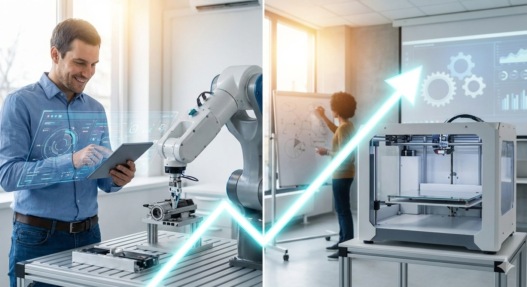
The rapid and relentless march of automation technology across industries has ignited intense and often anxiety-ridden debates regarding its profound and multifaceted impact on the global workforce. It has become commonplace to hear pronouncements and predictions suggesting that the widespread adoption of automation will inevitably lead to massive and unprecedented job displacement, leaving millions of individuals facing unemployment and economic hardship.
But is this seemingly straightforward narrative truly the complete and accurate depiction of the unfolding reality? In this comprehensive blog post, we will undertake a detailed and nuanced examination of the prevailing misconceptions that often cloud the discourse surrounding automation and its impact on job displacement. We aim to delve deep into the real and complex effects of technology on employment dynamics, moving beyond simplistic pronouncements of a job apocalypse.
The Core Misconception: Automation Equals Job Loss
One of the most pervasive and deeply ingrained myths surrounding automation is the unequivocal belief that its primary and sole outcome will be large-scale and irreversible job loss across the global economy. While it is undeniable that automation leads to the replacement of certain specific roles that involve repetitive or highly manual tasks, this perspective often overlooks the crucial counterpoint. Automation also serves as a significant catalyst for the creation of entirely new job opportunities and the evolution of existing roles.
As industries undergo fundamental transformations driven by technological advancements, entirely new job categories and specializations emerge, often requiring a different and more advanced set of skills than those displaced by these changes. These periods of disruption, while initially causing anxieties about job security, ultimately resulted in periods of net job creation over the long term, albeit often necessitating significant adaptation and reskilling of the workforce.
How does Automation Affect Jobs?
Jobs at Risk vs. Jobs Created
It is crucial to recognize that not all jobs are equally susceptible to the transformative and potentially displacing effects of automation. Roles that primarily involve routine, highly repetitive, and predictable tasks are generally considered the most vulnerable to automation through the implementation of robotic process automation (RPA) or other similar technologies.
On the other hand, job roles that heavily rely on uniquely human capabilities, such as creativity and innovation, emotional intelligence and interpersonal skills, complex problem-solving and critical thinking, and nuanced decision-making in unstructured environments, are generally considered far less likely to be fully automated in the foreseeable future.
This significant projection underscores the dynamic and evolving nature of the job market in the era of automation, highlighting the potential for both substantial job creation and displacement.
Examples Across Industries
The impact of automation on employment is already being observed across a diverse range of industries, often presenting a complex interplay of job displacement and job creation:
Manufacturing
The implementation of automation technologies, such as robotic assembly lines and computer-controlled machinery, has undoubtedly streamlined production processes and reduced the need for specific manual labor roles. However, this automation has simultaneously led to the creation of new and increasingly important roles in areas such as advanced tech operations, specialized equipment maintenance and repair, and skilled production management.
Healthcare
While robotic surgeries and sophisticated AI-powered diagnostic tools are increasingly being adopted to enhance the capabilities of medical professionals, they are not necessarily replacing doctors or surgeons. Instead, these technologies are often acting as robust support systems, leading to the emergence of new positions in areas such as specialized tech support for medical equipment and AI oversight.
Retail
The rapid growth of e-commerce and the increasing automation of warehouse and logistics operations have undoubtedly transformed the retail landscape. However, this shift has also created significant demand for new roles in areas such as data analysis to understand online customer behavior, e-commerce solutions management to optimize online platforms.
Debunking Myths About Automation and Job Displacement
Several persistent myths often fuel anxieties surrounding automation and its impact on employment:
Myth 1: Automation Eliminates More Jobs Than It Creates
This pervasive belief often stems from a myopic focus on the immediate and short-term disruptions caused by automation in specific industries, without adequately considering the broader and longer-term dynamics of economic and technological evolution.
A comprehensive report by the McKinsey Global Institute offers a more nuanced perspective, suggesting that while approximately 60% of current occupations could potentially see up to 30% of their constituent activities automated by existing technologies, less than 5% of all current occupations possess the technological feasibility for complete automation.
Myth 2: Low-Skilled Jobs Are Unsustainable
This myth often neglects the inherent adaptability and potential for upskilling among workers in traditionally low-skilled roles. While automation is likely to take over many routine and manual tasks within these sectors, it also tends to drive overall productivity gains.
This increased productivity can lead to lower consumer prices, increased demand for goods and services, and ultimately the creation of new job opportunities, even within traditionally low-skilled sectors, often requiring workers to take on slightly different responsibilities with some level of additional training.
The Real Impact of Automation on Employment
Emphasizing Augmentation Over Replacement
A crucial aspect of understanding the real impact of automation on employment is recognizing that its effect is often one of augmentation rather than outright replacement. AI and automation technologies are being deployed not to eliminate human roles but rather to enhance human capabilities. It automates repetitive aspects of jobs and provides powerful tools that enable workers to perform their tasks more efficiently and effectively.
For instance, in fields like data analysis, AI algorithms can rapidly process and analyze vast datasets, uncovering valuable patterns and insights that would be incredibly time-consuming for humans to identify manually. However, the critical role of human experts remains in interpreting these AI-generated insights, applying their contextual understanding and critical thinking to draw meaningful conclusions, and ultimately implementing strategic decisions based on the data.
The Need for Reskilling and Lifelong Learning
To not only survive but also thrive in an increasingly automated job market, a fundamental shift towards a culture of reskilling and lifelong learning is essential for workers across all skill levels. The skills in high demand in the future workforce will likely differ from those prevalent today, necessitating a proactive and continuous commitment to acquiring new knowledge and developing new competencies.
Upskilling, which involves learning new skills to enhance one’s current role or prepare for more advanced responsibilities, and reskilling, which consists of acquiring entirely new skill sets to transition into different occupations, are becoming indispensable strategies for navigating the evolving job market.
Actionable Steps:
- Proactively identify potential skills gaps in your current role or desired career path and actively engage in ongoing education, training courses, or professional certification programs to acquire the necessary competencies.
- Leverage the vast array of online learning platforms, such as Coursera, Udemy, and LinkedIn Learning, which offer flexible and often affordable opportunities to learn new skills at your own pace and convenience.
- Employers can play a vital role by providing on-site training opportunities for their employees, offering financial support or tuition reimbursement for relevant external courses, and fostering a company culture that values and encourages continuous learning and professional development in emerging technologies.
Addressing Automation Job Displacement Solutions
Policy Recommendations
Governments have a significant role to play in mitigating the potential negative consequences of automation-induced job displacement and facilitating a smooth transition for workers into new roles. Some key policy recommendations include:
- Offering financial incentives and tax breaks to businesses that invest in comprehensive employee training and upskilling programs, encouraging them to prepare their workforce for the changing demands of automation proactively.
- Implementing robust social safety net programs, such as enhanced unemployment benefits and job retraining initiatives, to provide support and resources for individuals who are displaced by automation and need assistance in finding new employment.
- Investing in public education reforms, particularly in areas such as STEM (Science, Technology, Engineering, and Mathematics) education and digital literacy, to equip future generations with the foundational skills needed to thrive in an increasingly technology-driven economy.
Case Study:
Germany’s innovative “Kurzarbeit” (short-time work) model provides a compelling example of how government policy can help mitigate the effects of economic downturns and technological transitions on employment. Under this model, instead of resorting to widespread layoffs during periods of reduced demand or technological disruption, companies can reduce employee working hours, with the government partially subsidizing the lost wages.
This strategy has proven effective in preserving jobs, maintaining workforce skills, and facilitating a faster economic recovery by avoiding large-scale unemployment.
Ethical Considerations and Corporate Responsibility
The increasing adoption of automation, particularly AI-powered systems, raises significant ethical considerations that businesses must address responsibly. These include the potential risks of job displacement, the need for fairness and transparency in algorithmic decision-making, and concerns about data privacy related to the use of artificial intelligence (AI).
Corporations have a fundamental responsibility to utilize technology ethically and with careful consideration of its societal impact. This includes maintaining open and transparent communication with employees about automation plans, proactively providing pathways for workforce transition and adaptation through training and reskilling programs, and engaging in responsible innovation that prioritizes both human well-being and efficiency gains.
Conclusion
Automation will undoubtedly continue its trajectory as a powerful and transformative force shaping the future of work across all industries. However, the often-sensationalized narrative of inevitable and widespread job loss paints an incomplete and potentially misleading picture.
The reality is far more nuanced, characterized by an ongoing evolution of job roles, a fundamental transformation of industries, and the emergence of entirely new opportunities that we may not even fully envision today. By proactively adopting a mindset of lifelong learning and continuous adaptation, both individuals and organizations can effectively navigate this significant shift in the labor market, ultimately benefiting both the economy and society as a whole.
For further and more in-depth insights into the multifaceted impact of automation on various sectors, we encourage you to explore our additional resources on topics such as “Rethinking Automation in Industry” and “Embracing Technology for Job Creation.”
Staying informed about the latest trends, remaining adaptable to change, and proactively preparing for the evolving demands of the job market are crucial steps in navigating the age of automation successfully.
