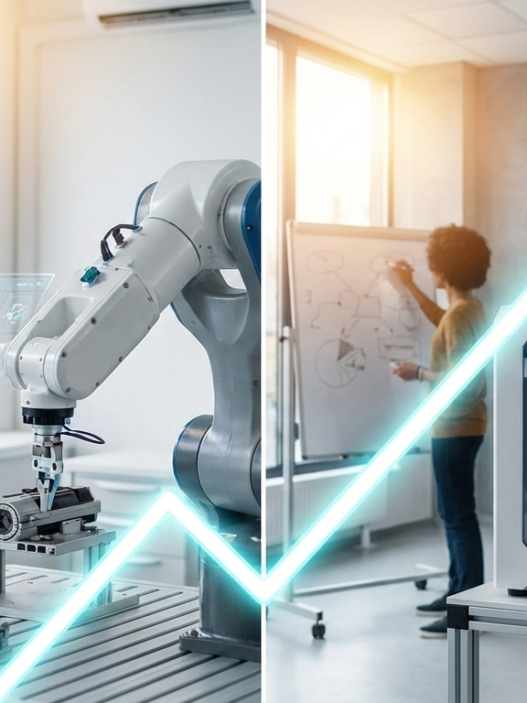
In an era relentlessly shaped by the currents of rapid technological advancements, intelligent automation has emerged as a truly transformative force. This veritable game-changer is profoundly reshaping operational paradigms across numerous critical sectors. The compelling data from a McKinsey report underscores this transformative potential, suggesting that intelligent automation could significantly amplify global productivity growth, projecting an annual increase ranging from 0.8 to a substantial 1.4 percent.
However, the abstract notion of global productivity gains begs a more granular exploration: what are the tangible and specific implications of this technological revolution for pivotal industries such as healthcare, finance, and manufacturing? This expanded article undertakes a comprehensive examination of the multifaceted impact of intelligent automation, meticulously analyzing its potential to revolutionize these distinct sectors, drive unprecedented increases in efficiency, and fundamentally optimize core operational processes.
Intelligent Automation in Healthcare
Automation in the healthcare sector transcends the mere implementation of new technologies; it represents a fundamental transformation in the very fabric of patient care delivery and overall operational efficiency.
At the nucleus of this profound shift lies the strategic and increasingly sophisticated integration of artificial intelligence (AI) and machine learning (ML) into the intricate tapestry of healthcare operations, yielding a profound and multifaceted impact that touches virtually every aspect of the industry.
Streamlining Administrative Tasks
Healthcare facilities, ranging from sprawling hospital networks to smaller clinics, have historically grappled with the significant burden imposed by a vast and often labyrinthine array of administrative tasks. The sheer volume of paperwork, the complexities of patient scheduling and appointment management, the intricacies of medical billing and insurance processing, and the meticulous demands of comprehensive data management have often diverted valuable time and resources away from the core mission of providing high-quality patient care.
The strategic implementation of intelligent automation in healthcare offers a powerful solution to these challenges. By automating these repetitive, rule-based administrative processes, healthcare organizations can achieve a significant reduction in human errors, realize substantially lower operational costs associated with manual processing, and ultimately enhance the overall efficiency and quality of patient service delivery.
Enhancing Patient Engagement and Care
Beyond administrative efficiencies, intelligent automation plays a pivotal role in directly enhancing patient outcomes and fostering a more patient-centric healthcare experience. AI-driven tools possess the remarkable ability to analyze vast quantities of patient data, including medical history, genetic information, lifestyle factors, and real-time physiological data, to generate highly personalized treatment plans tailored to the unique needs of each individual.
Furthermore, these analytical capabilities enable the prediction of potential patient needs before they even arise. For example, wearable medical devices equipped with AI algorithms can continuously monitor a patient’s vital signs in real-time, generating immediate alerts for any abnormal readings or concerning trends. This proactive monitoring enables timely medical interventions, potentially preventing serious health events and enhancing overall patient well-being.
Role of AI in Accelerating Drug Discovery
The transformative impact of intelligent automation in healthcare extends even to the critical and often lengthy process of drug discovery and development. Traditional drug discovery is a time-consuming, expensive, and often serendipitous endeavor. This analytical power enables AI to identify potential drug candidates with greater accuracy and efficiency, significantly expediting the entire research and development pipeline.
By reducing the time from initial laboratory research to the eventual availability of new medications on the market, intelligent automation has the potential to dramatically enhance the availability of innovative and potentially life-saving treatments for a wide range of diseases
Intelligent Automation in Finance
The financial sector has long been an early adopter of technological advancements, and the integration of intelligent automation in finance is now leading to truly exceptional improvements in both service delivery and fundamental operational efficiency.
From automating routine and high-volume transactional processes to deploying sophisticated AI algorithms that manage complex investment portfolios and assess intricate financial risks, the impact of intelligent automation on the financial industry is both broad in scope and profoundly deep in its implications.
Optimizing Financial Transactions and Operations
Intelligent automation plays a crucial role in streamlining a wide range of core financial processes, significantly reducing the reliance on manual intervention that was traditionally required. Tasks such as efficiently processing invoices, meticulously executing regulatory compliance checks, and accurately reconciling vast datasets are now being automated through sophisticated AI and robotic process automation (RPA) tools.
This automation not only ensures a higher degree of accuracy and operational efficiency but also enables financial institutions to strategically reallocate valuable human resources towards more complex, strategic, and customer-centric activities, ultimately enhancing overall decision-making processes and improving the organization’s agility.
AI-Powered Fraud Detection and Risk Management
Artificial intelligence in financial services is proving to be an indispensable asset in bolstering security through advanced fraud detection and enhancing overall risk management capabilities. Machine learning algorithms possess the remarkable ability to analyze intricate patterns within vast volumes of transaction data in real-time, enabling them to identify subtle anomalies and deviations from established norms that may indicate fraudulent activity.
This real-time analytical capability significantly enhances the security posture of financial institutions, providing an additional and increasingly sophisticated layer of protection for both consumers and the institutions themselves.
Elevating Customer Service
Banks and other financial institutions are increasingly leveraging the power of intelligent automation to significantly enhance the quality and efficiency of their customer service operations. AI-driven chatbots, for instance, provide customers with instant and readily available assistance, seamlessly handling a wide range of common queries, offering account information, and guiding users through various financial processes.
Importantly, these AI-powered virtual assistants are not static; they possess the ability to learn from their interactions with customers, continuously improving their responses and expanding their knowledge base over time. Incorporating a relevant and compelling case study that illustrates the tangible benefits of AI-powered customer service within a financial institution can provide a concrete and persuasive example of these advantages in action.
Intelligent Automation in Manufacturing
The manufacturing sector has historically been at the forefront of embracing technological integration to optimize production processes. The advent of intelligent automation is now propelling it to unprecedented levels of efficiency, productivity, and quality control.
Revamping Manufacturing Processes
In the dynamic world of manufacturing, process automation, particularly when infused with intelligence, is fundamentally revolutionizing traditional production lines. By strategically incorporating AI and machine learning algorithms into manufacturing operations, companies can achieve significant improvements in a wide range of critical areas.
This includes the intelligent optimization of production schedules to minimize downtime and maximize output, the implementation of sophisticated inventory management systems that predict demand and ensure optimal stock levels, and the deployment of AI-powered quality control systems that can identify defects in real-time with unparalleled accuracy.
Predictive Maintenance and Unwavering Quality Control
Intelligent automation plays a crucial role in enhancing the reliability and quality of manufacturing operations by implementing AI-driven predictive maintenance and advanced quality control systems. Predictive maintenance algorithms continuously analyze data from sensors embedded in machinery and equipment to anticipate potential failures and breakdowns before they occur.
This proactive approach enables timely interventions and preventive maintenance, significantly reducing costly unplanned downtime, extending the lifespan of valuable equipment, and ensuring smoother and more consistent production schedules. Similarly, intelligent automation is revolutionizing quality control by deploying AI-powered vision systems and other analytical tools to inspect products at various stages of the manufacturing process automatically.
Supply Chain Optimization
The transformative power of intelligent automation extends beyond the confines of the production floor to encompass the entire, often complex, and geographically dispersed supply chain. AI algorithms can analyze vast amounts of data related to demand patterns, inventory levels across the supply network, transportation logistics, and potential disruptions to predict future demand trends with greater accuracy.
This enables them to optimize inventory levels at each stage of the supply chain and select the most efficient and cost-effective shipping routes. This comprehensive and data-driven approach to supply chain optimization yields significantly streamlined operations, reduced transportation and warehousing costs, and enhanced responsiveness to market fluctuations, ultimately leading to improved customer satisfaction through the more reliable and timely delivery of goods.
Ease of Use vs. Advanced Features
We observed a common trade-off among the top AI background removal software between prioritizing a simple and intuitive user experience and offering a comprehensive suite of advanced features and customization options. Tools that effectively strike a balance between these two aspects often prove to be the most versatile and favored in professional settings, catering to both efficiency and control.
Conclusion: Industry Future with Intelligent Automation
The pervasive and profound impact of intelligent automation across critical sectors, including healthcare, finance, and manufacturing, is undeniable and far-reaching. By strategically embracing the power of smart automation, businesses can not only significantly enhance their current operational capabilities but also proactively prepare themselves to effectively navigate future challenges and capitalize on emerging opportunities in an ever-evolving market environment.
For organizations considering an intelligent automation journey, a prudent and strategic approach often involves starting with smaller, well-defined pilot projects within a specific area of the business before scaling automation initiatives across the entire enterprise.
Explore the transformative potential of intelligent automation and discover how it can revolutionize your business operations. Contact us today for a personalized consultation with our experts and take the first step on your journey towards achieving enhanced efficiency, fostering more significant innovation, and securing a competitive advantage in the years to come.
Frequently Asked Questions
What exactly constitutes intelligent automation in the context of healthcare?
Intelligent automation in healthcare refers to the strategic application of artificial intelligence (AI) and other advanced technologies, such as machine learning, natural language processing, and robotic process automation, to streamline various healthcare processes.
In what ways is automation impacting the financial services industry?
Automation is having a transformative impact on financial services, significantly enhancing operational efficiency by streamlining routine tasks and bolstering security through the implementation of sophisticated AI-powered fraud detection and risk management systems.
What are the key benefits that automation brings to the manufacturing sector?
The implementation of automation in manufacturing offers a multitude of compelling benefits, including significant improvements in overall productivity and output, as well as substantial reductions in operational costs through optimized resource utilization and waste reduction
How does intelligent automation fundamentally transform various industries?
Intelligent automation fundamentally transforms industries by optimizing core operational processes, significantly reducing the incidence of human error in repetitive tasks, enabling data-driven decision-making through advanced analytics and insights..
Intelligent automation is changing the game across sectors—transforming healthcare, streamlining finance, and optimizing manufacturing. Dive back into our in-depth analysis, The Transformative Impact of Intelligent Automation on Healthcare, Finance, and Manufacturing, explore more of our insights on the TechQwaz homepage, or reach out via our About Us or Contact pages when you’re ready to connect. Want to expand your knowledge toolkit? The Automation Blog offers real-world sector updates, while GUVI’s “Best YouTube Channels to Learn Automation Testing” guide helps sharpen your skills. Craving a deeper dive? Don’t miss our suggested read: From Analytics to Insights: Using AI to Make Better Marketing Decisions—your next big leap in applied AI starts here.